
For my history and more details see My Experimental Meanderings, Theory and Decision, 77, 291-296, 2014, doi:10.1007/s11238-014-9464-x, and the Addendum, Theory and Decision, 79, 273, 2015.
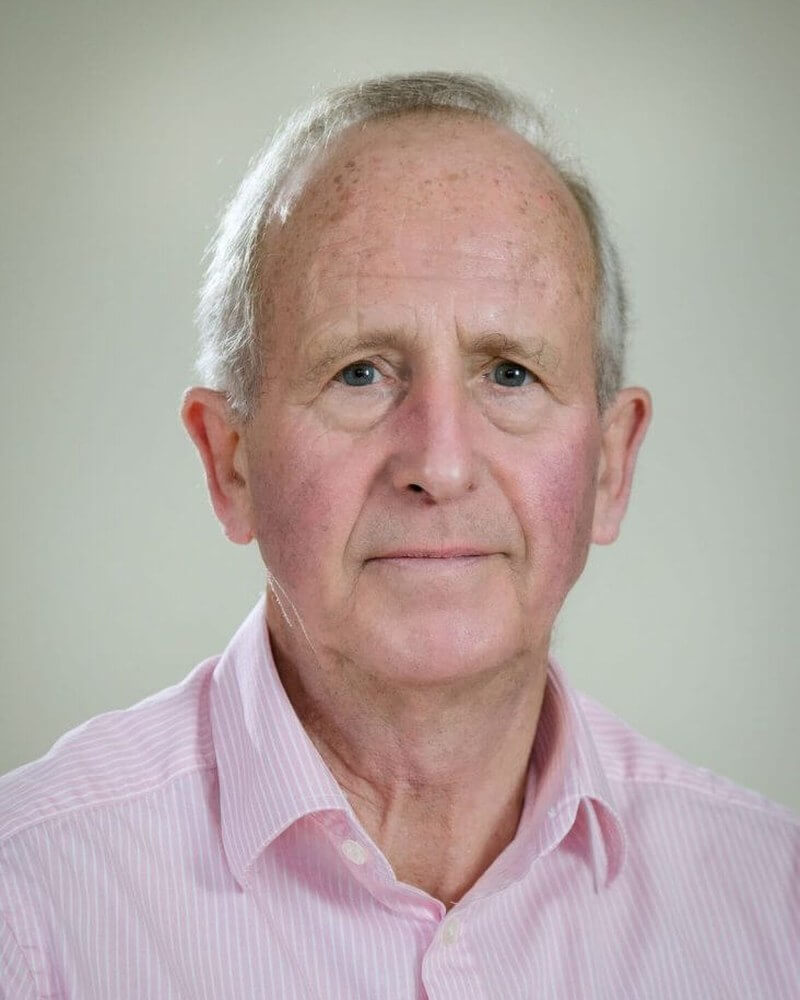
John Hey is Emeritus Professor of Economics and Statistics at the University of York. His research focuses on individual decision-making under risk and ambiguity, using experiments to understand how people actually make choices. Originally trained as an economic theorist, he became one of the early adopters of experimental methods in the UK and, together with Graham Loomes, founded York’s Centre for Experimental Economics (EXEC). He also served for ten years as Managing Editor of the Economic Journal.
How did you end up in behavioural or experimental economics?
I was doing pure economic theory - which was intellectually satisfying, but increasingly unrealistic as a description of reality. I wanted to see what people actually do, rather than what they should do if acting optimally.
What question or problem currently motivates your research the most, and why?
Currently, I am investigating behaviour under ambiguity, both static and dynamic. While there are many theories of optimal behaviour under ambiguity, there is remarkably little on actual behaviour. I aim to fill this gap.
What do you see as the most important developments or challenges for behavioural and experimental economics over the next 5–10 years?
It needs to discover actual behaviour (both static and dynamic) in conditions of ambiguity. This will be difficult, and involve the investigation of ad hoc rules or rules of thumb. We need to steer experimental economics away from investigating the validity of theories of optimal behaviour. This latter assumes a level of sophistication of decision-making which seems to far exceeds human ability.
How has your research evolved over time?
See my article cited above – which traces the history of (some part of) experimental economics over the period since its birth.
What are the biggest challenges you’ve faced in your research?
Convincing funding bodies that experimental work is worth the funds, both for payments to subjects, and for experimental infrastructure (machines, software and research assistance).At York, they want us to do experiments with Prolific – which I resist with all my strength.
What advice would you give to PhD students or early-career researchers entering the field today?
Choose a good supervisor, one who is enthusiastic and knowledgeable about experimental economics, and listen to them. Choose your topic area carefully as this will probably dominate your academic life. Avoid game theory.
If you could redirect £10m of research funding tomorrow, what area would you direct them to?
I would avoid investigating game theory as too much work has been done in this field. I would prefer the investigation of behaviour under ambiguity and the evolution of social norms.