
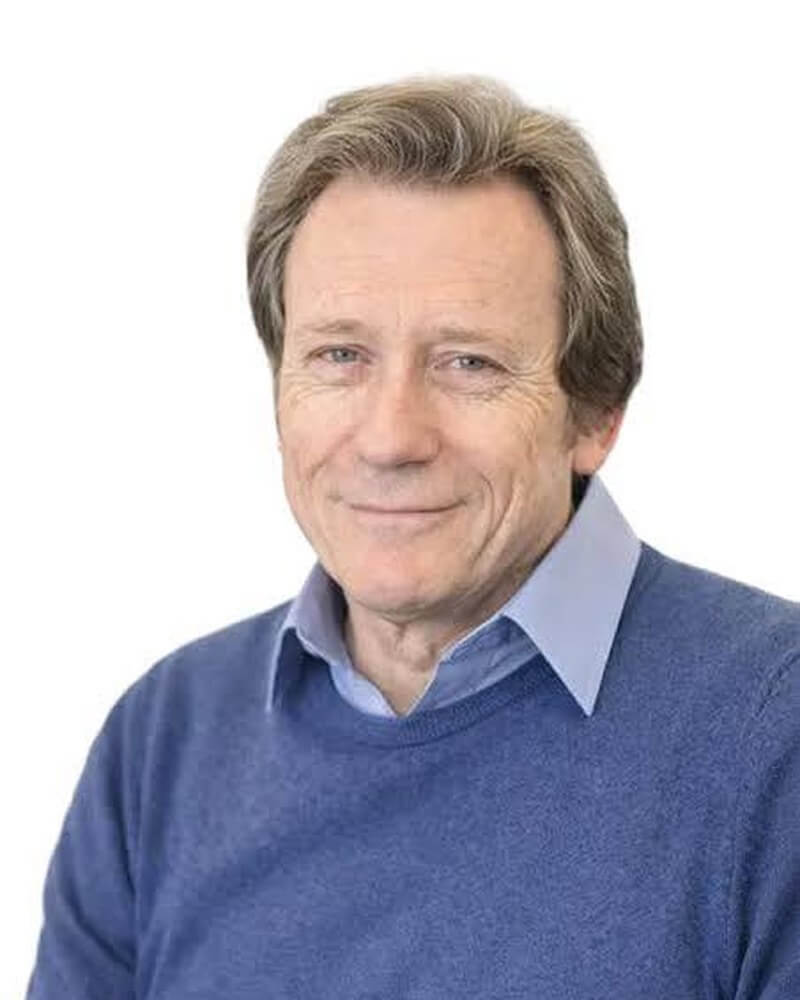
Interview by Irene Mussio and Dennie Van Dolder — May 2026
Graham Loomes is Emeritus Professor of Behavioural Science at Warwick Business School and a Fellow of the British Academy. His research focuses on decision-making under risk and the valuation of health, safety and environmental outcomes, and he is best known for co-developing Regret Theory and Disappointment Theory with Bob Sugden. Before joining Warwick, he held positions at Newcastle, York and East Anglia, and helped establish the Centre for Experimental Economics (EXEC) at York.
How did you end up in behavioural or experimental economics?
I’ve interpreted this as “How did I get into it in the first place?” I’ll start with that and leave how I ended up for later questions.
There were two initial stimuli.
The first was the work that my then colleague at the University of Newcastle, Mike Jones-Lee, was doing for the Department of Transport (DoT). He and other colleagues were undertaking a large survey of members of the British public to try to elicit the monetary values they placed on changes in the risks of being killed in road accidents. Their aim was to provide the DoT with a ‘Value of Statistical Life’ (VSL) for use in road safety cost-benefit analyses. Mike presented some of the main features and findings of the study in internal departmental seminars.
One issue that arose was whether individuals’ evaluations of particular risks to themselves were independent of the distribution of risks to others. With the assistance of a couple of dozen undergraduate students who volunteered to interview a convenience sample of members of the Newcastle public, I conducted a survey to explore this issue. It was, perhaps, a somewhat unsophisticated attempt, but it provided some interesting results and was published and led to Mike inviting me to collaborate more closely with him – a collaboration during the decades that followed which involved numerous co-authors working on a variety of projects concerned with valuing non-market goods and bads. More about that below.
The second stimulus came from Daniel Kahneman’s and Amos Tversky’s (K&T) Prospect Theory. My first reaction to the theory itself was to be quite sceptical: their model struck me as like a Heath Robinson contraption, with several components strung together and extra assumptions bolted on to get around inconvenient implications. On the other hand, their experimental results were intriguing: as I worked through their various decision scenarios, I found myself often inclined towards the patterns of response which ‘violated’ rational (Expected Utility) theory. Since I regarded myself as rational, I supposed that there must be some alternative rational explanation for these patterns of choice. I had some hunches about such an alternative. And crucially, I had the good fortune to have Bob Sugden as a Newcastle colleague: together we developed (our forms of) Regret Theory and Disappointment Theory to account for a number of the K&T ‘irregularities’ and some more ‘phenomena’ besides, such as certain breaches of monotonicity and transitivity.
However, the bulk of the experimental risky choice and valuation data existing at that time came from studies that were not designed with the structures of regret and disappointment in mind. In order to test various novel implications of our models, the obvious thing to do was to design fresh experiments that examined those implications more directly. So that’s how I got into that branch of experimental economics, with our first paper, exploring what we supposed were regret and disappointment effects, being published in 1987.
By that time, Bob had moved to the University of East Anglia (UEA) where he established a group using experimental methods and I had moved to the University of York where I assisted John Hey in founding EXEC, the Centre for Experimental Economics. During the following 5 or 6 years, Bob and I (sometimes with other co-authors) published a number of papers reporting experiments intended to examine various implications of regret theory for choices between laboratory lotteries. All seemed to go well, in the sense that the implications of regret theory appeared to be borne out by the results of those experiments.
However, a non-experimental economist at UEA (Steve Davies), after attending a presentation of some of this work, wondered whether the same results could be explained as a kind of display effect whereby more weight was given to payoffs that were displayed more often as a result of subdividing states of the world (termed ‘event-splitting effects’). Again, the obvious thing to do was to design an experiment to test that conjecture – which is what Bob Sugden and Chris Starmer did. On that basis, they concluded that the bulk of many lab experiment effects previously attributed to regret were, in fact, due to event-splitting. I was convinced by those results and by related results found by Steve Humphrey and did not undertake any further experiments testing for supposed regret effects in laboratory choices between lotteries.
That is not to say that I rejected the potential importance of anticipated regret in human decision making. There are many fields of real world activity – e.g. health behaviour, career choices, financial decisions, large consumer purchases – where regret may be an influential consideration. But experiments involving large numbers of binary choices between low-payoff lotteries that are each made in just a few seconds appear to be light on regret and heavier on display effects.
How has your research evolved over time?
The two branches of my research have evolved in somewhat different ways. I'll start with the survey research. For quite a long time – too long – I held on to the belief that when it came to important things like the health and safety of oneself and significant others, people would be able to express preferences and values – not necessarily very precisely, but within a reasonable ballpark – and that we could access them to a reasonable extent if we refined the survey techniques sufficiently.
So, much of the evolution of that branch of my research entailed developing different designs, building in consistency checks to see if there was internal consistency; and if (when) there wasn't, to give us ideas about how to modify subsequent designs and try again.
However, after three decades of this kind of work, I came to the conclusion that most people don't have highly-articulated preferences or values for health and safety which are amenable to elicitation by the kinds of surveys that we are accustomed to conduct. Using the terminology that Daniel Kahneman adopted and popularised, standard surveys are vulnerable to all sorts of ‘System 1’ effects and will not provide a sound basis for public health/safety/environmental policy. Whether methods involving more extensive and intensive ‘System 2’ deliberation will achieve such an objective remains to be seen.
Now for the other branch – lab experiments. One of the things I became increasingly aware of was the ‘noise’ in most participants’ choices and valuations: that is, if the same option or pair of options was presented more than once in the course of an experiment (generally scattered about among dozens of other questions/tasks) it was not uncommon for a participant to respond differently on different instances. (A parallel phenomenon was observable in the health and safety surveys, where many people expressed considerable uncertainty about their health and safety responses, often giving quite wide ranges around their ‘best’ estimates.)
So the question was – and I think still is – how to account for and allow for the noise/variability in people’s decisions. Simply plugging in some conveniently specified off-the-shelf ‘error’ term seems inappropriate and potentially misleading. Patterns of response times appear compatible with the idea that the variability reflects some mental process at work in the generation/construction of responses. However, as far as I’m aware, there is as yet no strong consensus about how best to model that process and apply that model to the interpretation of the data. Variants within the broad class of ‘accumulator’ / ‘drift diffusion’ / ‘sequential sampling’ models seem to have the kind of general characteristics required, but it is not obvious (to me) that there is one specification that leads the field.
What are the biggest challenges you’ve faced in your research?
It may sound glib and evasive to respond with something like “The biggest challenges are the next ones”; but that is how I feel.
I have been fortunate in having had enough funding and many talented and productive collaborators throughout my career. So the only real challenges have been trying to figure out what to do next when ideas I’ve thought had great promise turn out to be less promising – or indeed, well off the mark – when put to the test.
What question or problem currently motivates your research the most, and why? If you could redirect £10m of research funding tomorrow, what area would you direct them to?
I indicated in my responses to Q2 that we don’t yet have adequate models of individual decision processes, nor do we have reliable answers to the question of how government departments/agencies should value the benefits/harms of public policies in areas such as health, safety and the environment. £10m won’t really go far towards filling those gaps, but they are the issues to which I should like to see more resources – including my own – allocated.
What do you see as the most important developments or challenges for behavioural and experimental economics over the next 5–10 years?
A continuing challenge is to establish the relationship between a ‘lab’ experiment (or survey) and whatever behaviour in the ‘natural’ environment the experiment is supposed to be shedding light upon. Ideally, the emphasis should be on field experiments where participants are unaware that they are in a particular treatment group as part of a larger study and that their ‘behaviour of interest’ is just one of the many things they are doing in the course of their normal life activities. Of course, that is a counsel of perfection: in many areas of interest, a ‘proper’ field trial may be too costly and time-consuming and may be blocked by vested interests. Still, to the extent that lab experiments or surveys appear to be the best that can be done under the prevailing circumstances, researchers need to address the limits to external validity if and when any claims are being made about the implications for the world outside of the lab.
Another challenge is as follows. My heart sinks a little when authors claim to be ‘controlling for’ certain ‘characteristics’ of their participants – such as their ‘risk attitude’ or ‘personal time discount rate’ or ‘degree of sociality’ – when what they have done is included a couple of risk tables or time trade-off questions or a dictator/ultimatum game and extrapolated from these. It is as if the authors think that an individual has some stable, all-purpose index of each of these things that can be measured by a simple instrument and then used in the analysis of their data from an experiment that may have a quite different structure and/or parameters. But the facts are that different instruments may elicit substantially different indices from the same individual and different rankings across samples. If part of the appeal of conducting experiments is to apply scientifically sound methods to generate robust results, then ignoring past experimental evidence about the unreliability of these so-called controls seems . . . well, not very good science.
What advice would you give to PhD students or early-career researchers entering the field today?
In a way, this is the most difficult question of the 7 because much of the answer depends on the person’s motivations and skills, the topics/fields they are interested in, the quality of the research environment they inhabit and the support they receive from colleagues, and so on. I don’t think I have any generic advice to offer over and above the things that can be inferred from my earlier answers.